
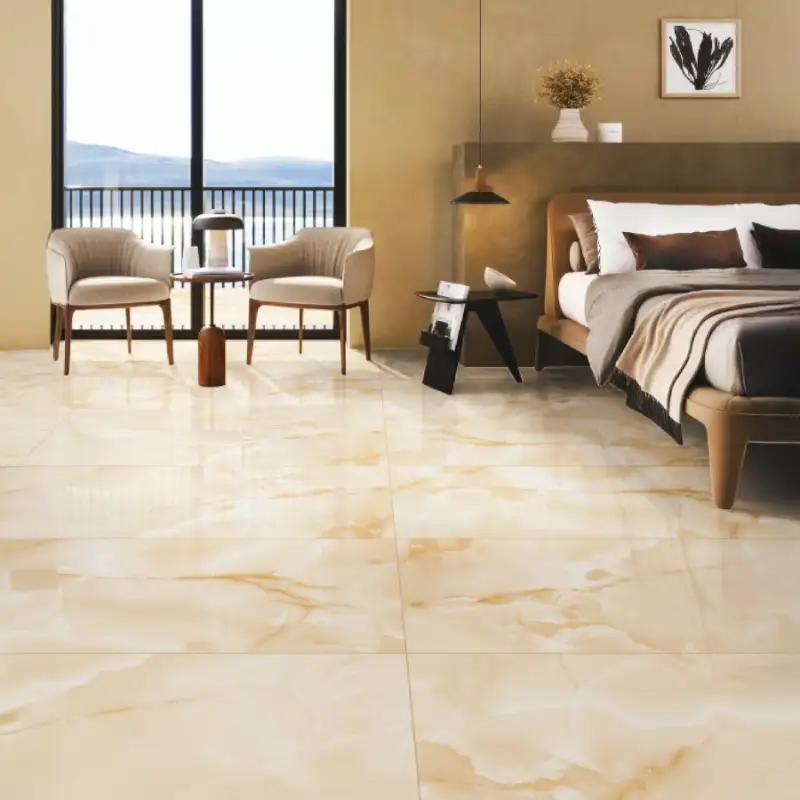
Walk into any tile showroom and the first question is usually: vitrified or ceramic? Both look great, but they are made differently and suit different spaces. Here is the simple version.
What is a ceramic tile?
Ceramic tiles are made from clay that is shaped and fired. They have a glazed top layer that carries the colour and design. They are lighter, easier to cut and usually lower in price, which makes them a popular choice for walls — bathroom walls, kitchen backsplashes and feature walls.
What is a vitrified tile?
Vitrified tiles are made from a mix of clay and silica that is fired at a much higher temperature. The mix partly turns glass-like (“vitrifies”), so the tile becomes denser, harder and far less porous. That is why vitrified tiles are the go-to choice for floors in living rooms, bedrooms and high-traffic areas.
Quick comparison
| Ceramic | Vitrified | |
|---|---|---|
| Water absorption | Higher | Very low |
| Strength | Good | Higher – resists wear |
| Best for | Walls, low-traffic areas | Floors, high-traffic areas |
| Weight & cutting | Lighter, easier to cut | Heavier, needs skilled laying |
| Price | Usually lower | Usually higher |
Which should you choose?
- Living room & bedroom floors: vitrified – it handles daily foot traffic and is easy to mop.
- Bathroom & kitchen walls: ceramic works well and gives you more design choice.
- Bathroom floors: choose a matte or anti-skid finish for safety.
- Outdoor & parking: use heavy-duty tiles made for outdoor use.
A note for Chennai homes
Chennai’s humid, coastal climate means floors stay damp longer during the monsoon. Low-absorption tiles such as vitrified are easier to keep clean and less likely to stain. Pair them with good-quality grout and you will have floors that look new for years.
Still unsure? Bring your room size and a photo to our Egmore showroom — our team will show you both side by side.